

The best deck railing pairs a material to your view and climate, then matches a Tarimatec decking colour to the rail. Glass and cable suit open views; black aluminium suits modern greys; warm wood-tone boards soften steel. In Canada, plan for snow load, corrosion-resistant hardware, frost-safe footings, and a 36-42 inch guard height.
Short answer: The best deck railing pairs a material to your view and climate, then matches a Tarimatec decking colour to the rail. Glass and cable suit open views; black aluminium suits modern greys; warm wood-tone boards soften steel. In Canada, plan for snow load, corrosion-resistant hardware, frost-safe footings, and a 36-42 inch guard height.
Your railing is the most visible part of your whole deck. It frames every view, sets the style, and in Canada it doubles as a building-code safety system that has to survive freeze-thaw, road salt, UV, and the weight of wet snow leaning against it. We supply the decking boards that sit underneath all of this, and the question we get asked most often on the phone is which railing to pick — so we build the answer the way a designer does: choose your railing material and style first, then choose a decking colour to match.
Below are 25 deck railing ideas grouped by material (glass, cable, aluminium, steel, composite, mixed wood-and-metal) and by style (modern, classic, cottage, farmhouse, view-deck). For each, we suggest a tone from the Tarimatec Chromatic, Wood, and Ethnic colour collections — the European-engineered (made in Spain) Ecofiber stone composite decking we distribute across Canada. We close with the Canadian-climate details that, in our experience, separate a railing that lasts 25 years from one that loosens in three.
Stand on your deck for a minute before you shop. Three quick decisions narrow the field fast, and once you answer them most of the options below fall away, leaving the two or three that actually fit your deck. We walk customers through these same three every week.
1. What is your view worth? If you are looking at a lake, a ravine, or a skyline, you want the railing to disappear — glass or horizontal cable. We have stood on a Muskoka cottage deck where a frameless glass run framed the lake so cleanly the railing simply read as the edge of the water. If your view is the neighbour's fence, flip it: a decorative railing (aluminium baluster, mixed wood-and-metal) earns its keep as a design feature instead.
2. What is your house's style? Your railing should echo your architecture. Modern homes want clean lines (black aluminium, glass, cable); century homes, farmhouses, and cottages want warmth and texture (wood top rails, classic balusters). A mismatched railing is the single most common reason a brand-new deck looks subtly "off" to us when we see the photos.
3. What does your climate demand? Coastal and poolside decks need corrosion-resistant hardware. Snow-belt decks need glass and cable rated for accumulated snow load. Every deck in this country needs frost-safe post footings below the frost line. None of this is optional — it decides whether your railing passes inspection and whether it is still standing straight after a few Prairie winters.
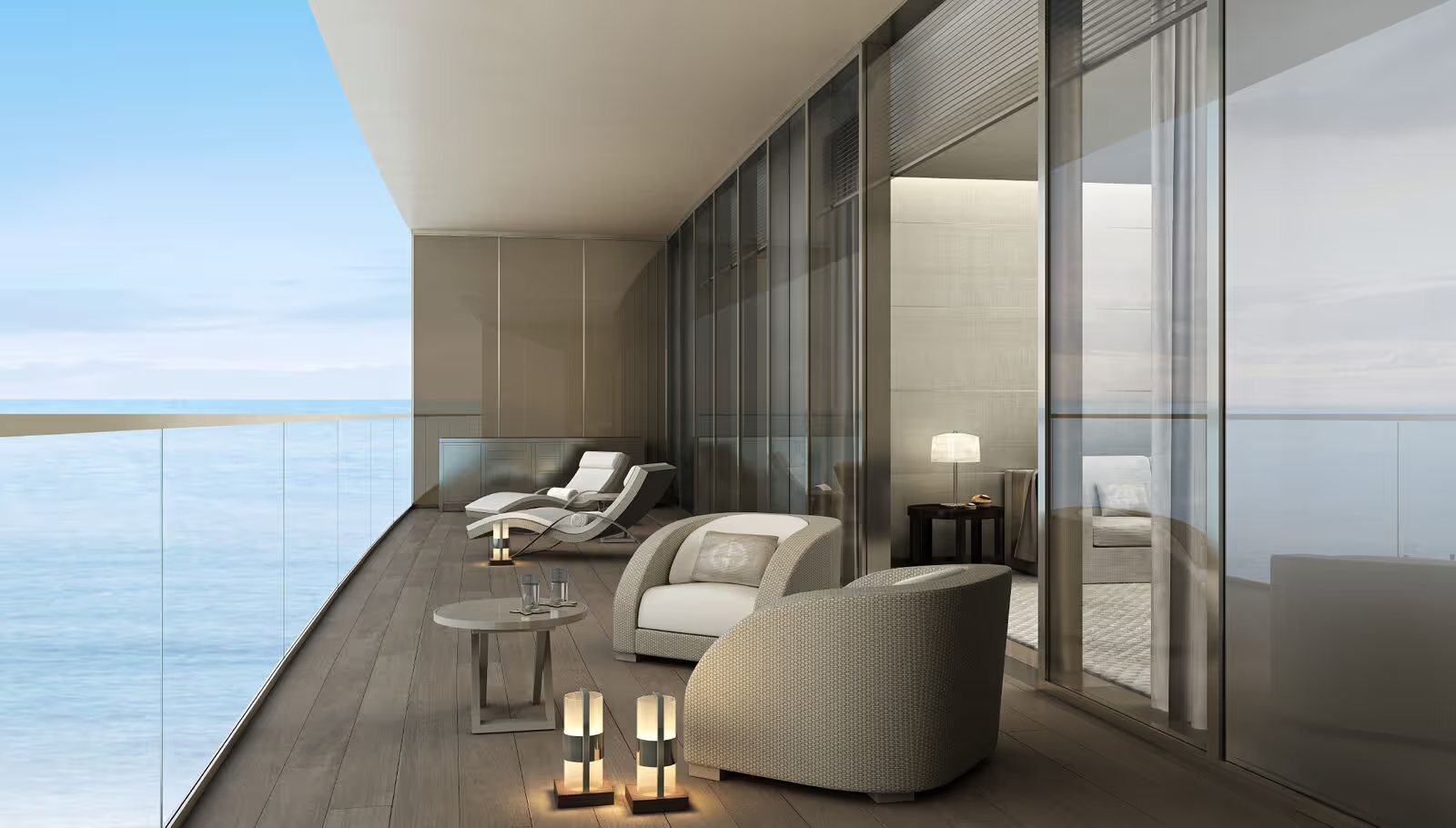
If the view is the entire reason you built the deck, glass is where we would start you. Tempered or laminated safety glass gives you an unbroken sightline, blocks wind without blocking light, and reads as effortlessly modern — and on a Halifax waterfront deck where the wind comes straight off the harbour, a glass panel is the difference between using the deck on a blustery evening and abandoning it to the gusts. It is often worth every dollar on a rooftop or lakefront build.
Frameless ("spigot-mounted") glass uses small stainless standoffs so almost nothing interrupts your view — the cleanest look available. We would pair it with a mid-to-dark grey from the Chromatic collection so the deck recedes and the landscape dominates.
A slim black frame around each panel is forgiving to install, hides the panel edges, and adds a crisp graphic line — the workhorse glass system we see on most Canadian decks. Match the frame to a charcoal Chromatic board for a tonal look, or contrast it with a warm Wood-collection oak tone for a Scandinavian "black-and-blond" palette.
Where your neighbours are close, switch to acid-etched or frosted panels on the property-line side and keep clear glass toward the view. A textured Ethnic-collection stone-look board underneath adds the spa-like quality that suits a private urban retreat.
Glass below, a generous flat top rail above in a tone that echoes your decking. A walnut or teak-look Wood-collection board carried up into the cap creates the warm, hospitality-grade finish you see on the best restaurant terraces.
Canadian note on glass: A glass panel is a solid surface, so it catches drifting and sliding snow — which means your posts, clamps, and glass thickness have to handle both the downward weight of accumulation and the lateral push of a snowbank leaning on it. Specify tempered or laminated safety glass, confirm the snow-load rating with your supplier, and keep the bottom gap large enough to clear meltwater so ice does not jack the panels in a freeze.
If you want the view but glass feels like too much wall, cable is the move. Thin stainless cables tensioned between posts practically vanish from a few metres away — we have watched a cable run on a Kawarthas dock-side deck disappear so completely that first-time guests reach out to check it is even there. Cable suits modern and cottage builds alike, it has become the default "view deck" railing across the country, and it usually comes in under glass on cost.
Stainless cable in matte-black aluminium or steel posts is the signature contemporary railing: the dark posts give structure, the cables disappear. Pair it with a cool grey Chromatic board for an all-modern palette, or — our favourite — set black posts and silver cables against a warm Wood-collection board.
Soften an all-metal cable system with a natural timber top rail. This "cottage-modern" combination is hugely popular for the lakefront and Muskoka-style builds we supply. Carry a teak or honey-oak Wood-collection tone from the boards up into the cap rail.
Vertical cables remove the "ladder effect" that horizontal runs can create for climbing toddlers — a genuine safety consideration plenty of Canadian families raise with us. The clean vertical rhythm pairs beautifully with a uniform mid-grey Chromatic board.
On a rooftop terrace, cable keeps weight and wind-load low while preserving the skyline. Combine it with a pedestal-mounted Surco anti-slip finish board — the linear-groove surface designed for wet and elevated applications.
Canadian note on cable: Near salt water or a chlorinated pool, specify marine-grade 316 stainless cable and fittings, not the cheaper 304 grade, or you will see rust streaks within a season — we have seen exactly that on a coastal deck that went one grade too low. Cables also need re-tensioning as the temperature swings through Canada's full range, so choose a system with accessible tensioners and check them each spring when you open the deck.
If you just want a railing that works and never thinks about you again, this is the one we point most homeowners toward. Powder-coated aluminium is the most-installed deck railing in Canada for good reason: it never rots or rusts the way steel can, it shrugs off freeze-thaw and road salt, a quality powder coat holds its colour for decades, and on a Prairie deck that rides forty-below in January and bakes in July, it survives the swing without complaint. It is also the easiest railing to pair with the composite decking we supply.
This is the single most popular deck combination in the country, because it is foolproof: crisp black vertical pickets against a cool grey board. Pair black aluminium with a mid-grey or driftwood tone from the Chromatic collection for a clean, resale-friendly deck that suits almost any house.
For a softer, traditional look, bronze or dark-brown pickets pair naturally with the browns and tans of the Wood collection — the warm alternative to black-and-grey, and the one we reach for on homes with brick, stone, or earth-toned siding.
White railing reads classic, coastal, and clean, and it suits the white-trimmed century homes and Maritime architecture we see out east. Ground the brightness with a richer board so the deck does not feel washed out — a warm walnut or textured Ethnic-collection tone gives it something substantial to stand on.
You do not have to choose between materials. Many aluminium systems accept glass or cable infill, so you can run solid pickets along the house side and open glass toward the view. Keep the metal one consistent colour (black is most versatile) and let your Tarimatec board tie the zones together.
Canadian note on aluminium: The fasteners and brackets matter as much as the rail — use stainless or coated hardware, never bare steel, to avoid rust bleed at the connection points where road-salt spray collects. A quality powder coat (look for an AAMA-rated finish) is what guarantees the colour survives a decade of hard Canadian UV.
Where aluminium is light and quiet, steel is heavy and bold — and if you want your railing to make a statement on a downtown Toronto rooftop, steel is what gives you that gallery-like presence. Powder-coated steel, including the popular horizontal-slat and perforated-panel "privacy screen" styles, brings an architectural weight designers love on modern and urban builds. It is stronger than aluminium, but it demands a flawless coating to keep rust at bay through our winters.
Wide horizontal steel slats double as railing and privacy screen — ideal for blocking a neighbour's sightline on a tight city lot while keeping a gallery-like feel. In matte black, it is striking against a pale grey or driftwood Chromatic board.
A laser-cut panel (geometric, botanical, or custom) turns the railing into the focal point and throws beautiful shadows across the boards in low sun. Let the railing be the star and keep the decking calm — a neutral Wood-collection tone or quiet grey lets the metalwork do the talking.
Black steel posts with a chunky reclaimed-look wood top rail is the quintessential urban-loft rooftop look. Echo it with a rich, textured Ethnic-collection board for a layered, materials-forward terrace.
Canadian note on steel: Insist on hot-dip galvanized or properly primed steel under the powder coat, touch up any scratch immediately (a chip to bare steel will rust and bleed across your boards), and avoid bare steel near the ocean entirely. For most homeowners we find aluminium delivers a similar look with far less corrosion worry — choose steel when you specifically want its strength or a panel style aluminium cannot match.
If you want your railing and deck to read as one continuous surface, this is the most cohesive look you can build — and it is especially powerful with a stone-composite board whose colour you can carry straight from the floor up into the cap. When a customer tells us they want the deck to look custom-built rather than assembled from parts, this is the direction we steer them.
A full composite railing in the same colour family as your boards gives a monolithic, high-end result with no jarring material change. With 31 Tarimatec colours across three collections, you can match floor and rail precisely — a tonal grey-on-grey or wood-on-wood deck that looks designed as one piece.
The best of both: a wide composite cap rail you can actually lean on, supported by low-maintenance black aluminium balusters or stainless cable below. Carry your exact decking tone into that cap — a warm Wood-collection board over black metal is a perennial favourite of ours.
On a ground-level deck where code may not require a tall guard, a perimeter bench or a run of planters clad in your decking board defines the edge without a conventional railing. Use the same Tarimatec board for the deck, the bench, and the planter faces so it reads as one sculptural piece. (Confirm your local guard-height rules first.)
Black metal balusters with natural wood-tone top and bottom rails is the defining "modern farmhouse" railing — warm, current, and friendly. Pull the rail's wood tone straight from your deck with a complementary Wood-collection board.
Maybe you would rather start from a look than from a material. If so, here are five style directions, each with the railing-plus-Tarimatec-colour pairing we would specify if you handed us your deck and told us the vibe.
Glass or horizontal cable in black hardware; clean lines, no decorative profiles. Pair with a cool grey or charcoal Chromatic board and a smooth Tecno finish.
Aluminium picket railing in black or white with a subtle top-rail profile; balanced and timeless. Pair with a warm Wood-collection tone in the textured Nature finish so the deck feels refined rather than stark.
Horizontal cable or simple wood-and-metal with a warm timber top rail; relaxed and view-forward. Pair with a honey, teak, or driftwood Wood-collection board that nods to a classic dock without the maintenance of real cedar.
Black metal balusters between warm wood-tone rails — the warm-meets-black palette of the moment. Pair with a mid-brown Wood-collection board and black hardware throughout.
Frameless glass or horizontal cable — whatever disappears most. Pair with a Surco anti-slip board on a pedestal system for a safe, open, elevated terrace that puts the view first.
Laser-cut steel panels or a strong contrast scheme where the railing is deliberately the feature. Pair with a dramatic Ethnic-collection or deep Chromatic tone so deck and railing read as one confident statement.
Every pairing above follows a few simple design rules. Once you understand them, you can match any railing to any of the 31 Tarimatec colours in the range — here is how we map the most common rail choices to a collection.
| Railing material and colour | Best-matched Tarimatec collection | Resulting style |
|---|---|---|
| Black aluminium / black steel | Chromatic (cool grey, charcoal, graphite) | Modern, resale-friendly, foolproof |
| Black metal with wood top rail | Wood (oak, teak, walnut tones) | Modern farmhouse / cottage-modern |
| Bronze / brown aluminium | Wood (warm browns and tans) | Traditional, earthy, brick-friendly |
| White aluminium | Wood or Ethnic (richer, grounding tones) | Classic, coastal, colonial |
| Stainless cable | Wood (warm) or Chromatic (cool) | View deck — warm or cool to taste |
| Frameless / framed glass | Chromatic (cool greys, charcoal) | Premium minimalist, view-forward |
| Laser-cut / slat steel feature | Ethnic (textured, architectural) | Bold, statement, urban |
| Composite rail matched to deck | Any — matched floor-to-rail | Monolithic, custom, high-end |
Three rules underpin that table. First, decide warm or cool and commit. Cool decks (greys, charcoals) pair with black and glass; warm decks (browns, oak, teak) pair with bronze, timber rails, and stone-look textures. Mixing the two is the most common way we see a deck end up looking accidental. Second, contrast or match — not "almost." Either match rail and deck tonally for a monolithic look, or contrast them clearly (dark rail, light deck); a rail that is slightly-but-not-quite the same colour reads as a mistake every time. Third, let one element be the hero. If the railing is a statement, keep the deck calm; if the deck colour is dramatic, keep the railing simple.
Because Tarimatec Ecofiber boards are colour-matched in the factory and EPD-verified for performance, the tone you pair today is the tone you keep — they are engineered to resist UV fade, so your palette will not drift out of harmony with the railing over the years. The easiest way to test a pairing is to hold the real thing against your railing sample: you can order Tarimatec colour samples online and see them in your own light first. For how the 31 colours behave across collections, see our guide to the best composite decking in Canada.
A beautiful railing that ignores Canadian conditions is a liability, full stop. These are the non-negotiables that protect your investment — and the people leaning on it on a crowded summer evening. We will not quote a deck without walking through them.
Across most of Canada, the National Building Code and provincial codes require a guard on any deck surface more than about 24 inches (600 mm) above grade. Guard height is generally 36 inches (900 mm) for residential decks up to roughly 5'11" above grade, rising to 42 inches (1070 mm) for higher decks — and the openings must be small enough that a 4-inch (100 mm) sphere cannot pass through, which protects small children. On a raised Toronto deck off a second-storey kitchen, that taller 42-inch guard is not a suggestion, it is the line between passing inspection and tearing it out. Rules vary by municipality and deck height, so confirm the exact requirement and permit process with your local building department before you build.
Glass and solid privacy panels catch sliding and drifting snow, adding both downward weight and lateral pressure on the posts and connections. On a snow-belt deck where a metre of accumulation can pile against the panel by February, confirm any glass or solid-panel system is engineered for your local snow load, and keep a small drainage gap at the bottom so meltwater escapes and ice does not build up under the panel.
Road salt, sea air, and pool chlorine are brutal on ordinary steel. On a Halifax waterfront deck taking salt spray off the harbour, this is the detail that ages the railing fastest — so specify marine-grade 316 stainless cable, fasteners, and fittings, or fully powder-coated aluminium, and avoid bare or galvanized steel that will streak rust. This single choice is the most common difference we see between a railing that still looks new at year ten and one bleeding rust by year two.
Canada's freeze-thaw cycle will heave any footing that does not reach below the local frost line, pushing your railing out of level and out of code. Set your railing-post footings on proper frost-depth piers or screw piles (frost depth ranges from roughly 4 feet in southern Ontario to 8 feet or more on the Prairies and up north; confirm locally). Pair frost-safe footings with a stone-composite deck surface engineered for that same freeze-thaw movement and the whole structure ages as one stable system. For how the boards handle the cold, see our breakdown of the best Trex alternatives in Canada.
Dark metal railings and dark boards both absorb heat in full sun. If your deck faces unobstructed afternoon sun — picture a south-facing Calgary deck with no tree cover after a chinook has stripped the snow — balance a dark railing with a board engineered to resist heat build-up. Tarimatec's mineral-rich Ecofiber composition manages surface heat better than many wood-fibre composites, and you might also lean toward a lighter board tone for barefoot comfort. You can model the material cost of your chosen railing-and-deck combination, by size and province, with the Zinodeck CAD cost calculator.
Choose the railing that frames your view and suits your home, match it to a Tarimatec colour we have engineered for Canadian weather, and you will have a deck that looks designed, not assembled — and stays that way through every freeze-thaw season.
Black powder-coated aluminium picket railing is the most-installed deck railing in Canada, because it never rusts, shrugs off road salt and freeze-thaw, needs almost no maintenance, and pairs cleanly with almost any house. It is most often combined with a cool grey composite board for a modern, resale-friendly look. Glass and horizontal cable are the fastest-growing alternatives where homeowners want to preserve a view.
Most Canadian codes require a guard on any deck more than about 24 inches (600 mm) above grade. The guard is generally 36 inches (900 mm) high for lower residential decks and 42 inches (1070 mm) for higher decks, with openings small enough to stop a 4-inch sphere. Exact heights and the trigger height vary by municipality and deck height, so always confirm with your local building department and pull the required permit before building.
Black railing pairs best with cool grey, charcoal, or driftwood tones — in the Tarimatec range, the Chromatic collection — for a crisp, modern, foolproof look. For a warmer "modern farmhouse" feel, pair black metal balusters with a wood-tone top rail and a mid-brown Wood-collection board. The key rule is to commit to warm or cool and either match or clearly contrast the rail and deck, never land in between.
Yes, and it often looks intentional and high-end. Common combinations include aluminium posts with glass or cable infill, a composite or wood top rail over black metal balusters, or solid pickets along the house side with open glass toward the view. Keep the metal a single consistent colour (black is most versatile) and let one shared decking tone tie the zones together so the deck reads as one design.
Frameless glass and horizontal stainless cable are the two best choices for preserving a view, because both nearly disappear from a few metres away. On a rooftop, cable keeps weight and wind-load low while glass blocks wind and adds a premium feel; pair either with a Surco anti-slip board on a pedestal system. Near salt or pools, specify marine-grade 316 stainless hardware, and confirm any glass system is rated for your local snow load.
Yes, when specified correctly. Use tempered or laminated safety glass in a system engineered for your local snow load, since glass panels catch sliding and drifting snow that adds downward weight and lateral pressure on the posts. Keep a small drainage gap at the bottom so meltwater escapes and ice cannot build up under the panel, and set the posts on frost-depth footings so winter heave does not push the railing out of level.
Or go straight to the range: Tarimatec composite decking in Canada · technical data for architects and specifiers · order decking samples.
{"@context":"https://schema.org","@type":"FAQPage","mainEntity":[{"@type":"Question","name":"What is the most popular deck railing in Canada?","acceptedAnswer":{"@type":"Answer","text":"Black powder-coated aluminium picket railing is the most-installed deck railing in Canada, because it never rusts, shrugs off road salt and freeze-thaw, needs almost no maintenance, and pairs cleanly with almost any house. It is most often combined with a cool grey composite board for a modern, resale-friendly look. Glass and horizontal cable are the fastest-growing alternatives where homeowners want to preserve a view."}},{"@type":"Question","name":"How tall does a deck railing have to be in Canada?","acceptedAnswer":{"@type":"Answer","text":"Most Canadian codes require a guard on any deck more than about 24 inches (600 mm) above grade. The guard is generally 36 inches (900 mm) high for lower residential decks and 42 inches (1070 mm) for higher decks, with openings small enough to stop a 4-inch sphere. Exact heights and the trigger height vary by municipality and deck height, so always confirm with your local building department and pull the required permit before building."}},{"@type":"Question","name":"What colour decking goes best with a black railing?","acceptedAnswer":{"@type":"Answer","text":"Black railing pairs best with cool grey, charcoal, or driftwood tones - in the Tarimatec range, the Chromatic collection - for a crisp, modern, foolproof look. For a warmer modern farmhouse feel, pair black metal balusters with a wood-tone top rail and a mid-brown Wood-collection board. The key rule is to commit to warm or cool and either match or clearly contrast the rail and deck, never land in between."}},{"@type":"Question","name":"Can I mix two railing materials on one deck?","acceptedAnswer":{"@type":"Answer","text":"Yes, and it often looks intentional and high-end. Common combinations include aluminium posts with glass or cable infill, a composite or wood top rail over black metal balusters, or solid pickets along the house side with open glass toward the view. Keep the metal a single consistent colour (black is most versatile) and let one shared decking tone tie the zones together so the deck reads as one design."}},{"@type":"Question","name":"What is the best deck railing for a view or rooftop?","acceptedAnswer":{"@type":"Answer","text":"Frameless glass and horizontal stainless cable are the two best choices for preserving a view, because both nearly disappear from a few metres away. On a rooftop, cable keeps weight and wind-load low while glass blocks wind and adds a premium feel; pair either with a Surco anti-slip board on a pedestal system. Near salt or pools, specify marine-grade 316 stainless hardware, and confirm any glass system is rated for your local snow load."}},{"@type":"Question","name":"Do glass deck railings hold up to Canadian winters?","acceptedAnswer":{"@type":"Answer","text":"Yes, when specified correctly. Use tempered or laminated safety glass in a system engineered for your local snow load, since glass panels catch sliding and drifting snow that adds downward weight and lateral pressure on the posts. Keep a small drainage gap at the bottom so meltwater escapes and ice cannot build up under the panel, and set the posts on frost-depth footings so winter heave does not push the railing out of level."}}]}