

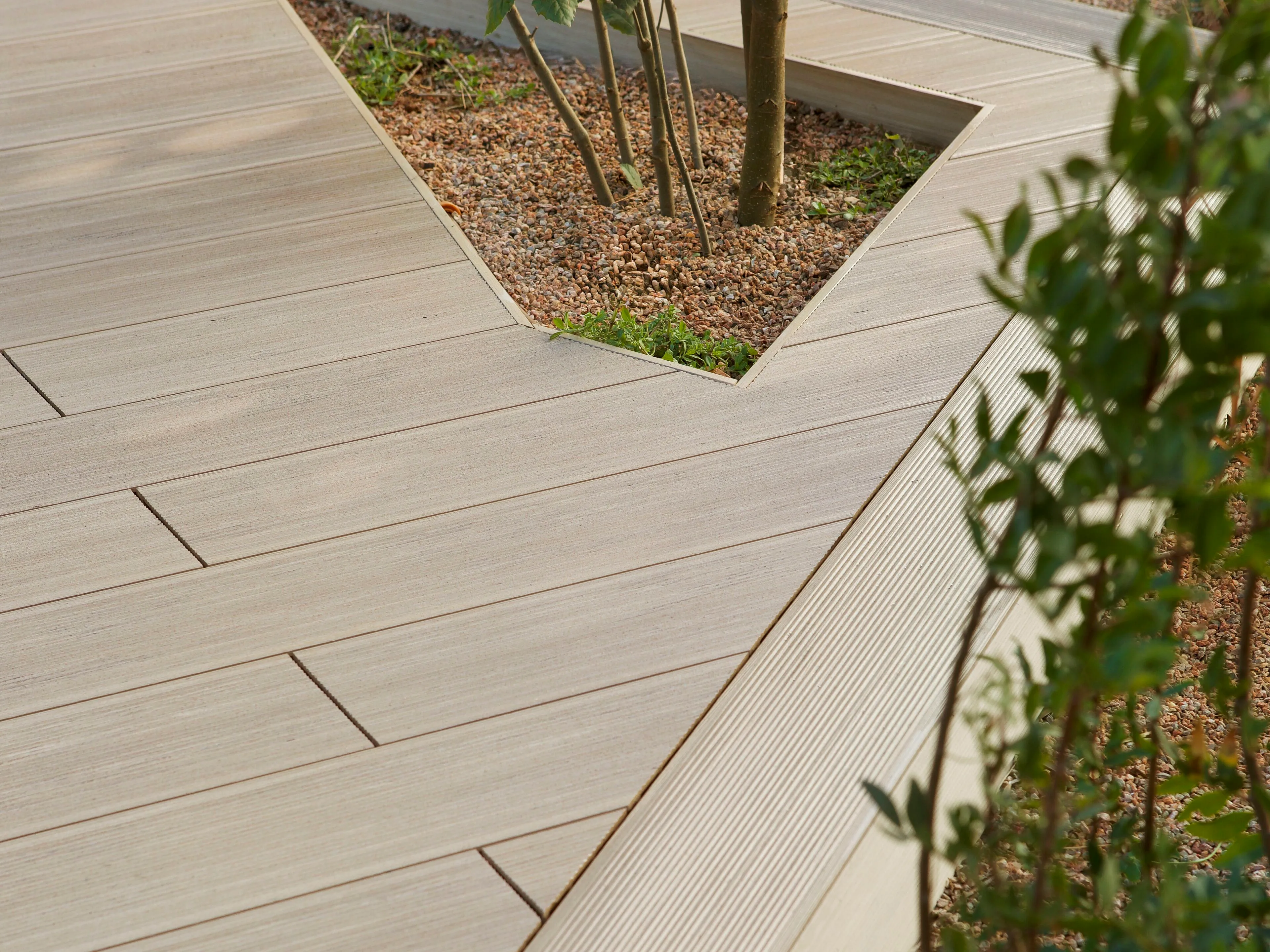
The best Trex alternatives in Canada are TimberTech and Fiberon for comparable capped composite, NewTechWood and EzDeck for value and supply, TruNorth for made-in-Ontario, and Tarimatec by Zinodeck — a European stone composite with a Tecnalia-verified EPD and stronger freeze-thaw performance. Your priority decides the pick.
Short answer: The best Trex alternatives in Canada are TimberTech and Fiberon for comparable capped composite, NewTechWood and EzDeck for value and supply, TruNorth for made-in-Ontario boards, and Tarimatec by Zinodeck — a European stone composite with a Tecnalia-verified EPD and stronger cold-climate performance. Your priority — price, Canadian supply, or verified sustainability — decides the pick.
You've priced out Trex Transcend, the number made you wince, and now you're wondering what else is out there. Fair question — and a common one. We supply composite decking across Canada and work alongside the builders who install it, from Halifax waterfronts to Winnipeg backyards, and Trex is a fine board that lands on a lot of our quotes. But it isn't the only good answer, and on a Canadian build it isn't always the best one. So here's the shortlist the way we'd walk you through it on a site visit: who's genuinely comparable, who's cheaper, who's actually Canadian, and where the documentation stops at a brochure.
Trex is the most recognized composite name in North America, and that recognition is worth something — it's why it's the default on so many quotes. But the homeowners and builders who call us already shopping alternatives almost always land on one of four reasons, and none of them is a knock on Trex. They're just the places where another board fits the project better.
Picture a Calgary deck in February. A chinook rolls in and the temperature jumps 20°C in a single afternoon — the surface goes from frozen to thawed and back before dinner. That daily expand-and-contract is exactly what wears a board down over a decade, and it's the reason the cold-climate line above isn't boilerplate. It's the variable most buyer's guides written for North Carolina never have to account for.
Six boards earn a place on our shortlist. We've kept each one honest about where it's made and whether its sustainability claim is verified or self-reported — because that distinction matters more than the percentage on the brochure, and we'll get to why further down.
If you liked the idea of Trex but wanted a touch more polish, this is the board we'd put in front of you first. TimberTech offers capped composite and an Advanced PVC line with genuinely excellent finishes and the deepest technical documentation in the field — the kind a specifier actually reads. Warranty is comparable to Trex; it's US-manufactured and widely available across Canada. You're not trading down on quality. You're choosing a different look and a slightly different price.
Fiberon is the alternative we reach for when the budget is real but the standards haven't dropped. Its capped composite lines come in at competitive prices with solid Canadian dealer coverage, and on a south-facing Toronto deck off a west-end alley, the capped surface holds colour and shrugs off July sun the way a quality composite should. Comparable performance, often a friendlier number on the quote.
NewTechWood's UltraShield 360-capped composite has a genuine Canadian (.ca) presence and a popular deck-tile range — and that tile range is the reason it lands on this list. If you're surfacing a downtown Toronto condo balcony over a membrane, snap-together tiles solve a problem full boards don't. It's the flexible, value-oriented option for projects that aren't a standard backyard rectangle.
EzDeck is a price-competitive Canadian distributor brand with broad availability and multiple tiers, which makes it the honest pick when budget leads the brief. We'll give you the one caveat we'd give anyone: there's no third-party sustainability verification behind it. If price is the priority and a registered EPD isn't on your checklist, that's a perfectly reasonable trade — just make it knowing it's a trade.
If buying Canadian is the point, TruNorth is the real article: it's manufactured in Brantford, Ontario. We'll be straight about why that can matter beyond the flag on the box — when a board gets gouged or a warranty claim comes up in year eight, a Canadian manufacturer keeps the support and the matching colour on this side of the border. For a Winnipeg homeowner whose deck rides -35°C every January, having the people who stand behind the product in the same country is not nothing.
This is the one we distribute, so take the enthusiasm with the disclosure — but the reasons we're biased are documented, not decorative. Tarimatec's Ecofiber stone composite is European-engineered, made in Spain by Plásticos Viters S.A., and selected specifically for Canadian weather. It's built from rice husk at 50 parts for every 100 parts of PVC, roughly a quarter of the blend by weight per the EPD — an agricultural by-product that would otherwise be burned or dumped — and 33% recovered composite re-used in production, per the EPD, it's backed by an EPD verified by Tecnalia, carries ISO 14001 certification and a 25-year warranty, and it's 100% recyclable at end of life. That's a documentation stack no other brand on this list can match. It comes in 31 colours, and Zinodeck distributes it exclusively in Canada from Vaughan, Ontario. Not made in Canada — we won't pretend otherwise — but warrantied and serviced here.
Here's the whole shortlist on one screen. If you read nothing else, read the "verified sustainability" column — that's the one that separates a board you can document from a board you can only describe.
| Alternative | vs. Trex | Warranty | Verified sustainability | Best for |
|---|---|---|---|---|
| TimberTech | Premium, more PVC options | 25–50 yr | Self-reported | Premium aesthetics |
| Fiberon | Comparable, often cheaper | 25–50 yr | Self-reported | Mid-range value |
| NewTechWood | Canadian presence, tiles | 25 yr | Self-reported | Flexibility, value |
| EzDeck | Lower price | Varies | None published | Budget |
| TruNorth | Made in Ontario | Limited lifetime | Self-reported | Made-in-Canada |
| Tarimatec (Zinodeck) | European stone composite, verified EPD | 25 yr | EPD (Tecnalia) + ISO | Sustainability, freeze-thaw, design |
One word on that warranty column, because it's the one buyers read fastest and understand least. "25–50 yr" reads generous until you open the actual document: most composite warranties split into a fade-and-stain promise and a separate structural promise, and the longest number usually applies to only one of them — often pro-rated, often residential-only. We're not knocking any board here; they're broadly comparable on paper. We're telling you the claim you'll someday make in year twelve lives in the fine print, not the headline. Read it before the number on the table decides your purchase.
Almost every brand on that list prints a recycled-content percentage. Far fewer can hand you an independently verified Environmental Product Declaration to back it — and on a project where someone is going to ask for documentation, that gap is the entire story. A number you can't verify is a marketing claim wearing a lab coat.
Picture a Halifax waterfront deck taking salt spray off the harbour all summer and freeze-thaw all winter — about the most punishing combination Canada serves up. The owner investing in a board to survive that wants more than a brochure figure; they want a credential that holds up the way they need the deck to. This is where Tarimatec separates from the field: the EPD is verified by Tecnalia, the ISO 14001 certificate is real, and for a LEED or BREEAM submission a registered document outweighs the highest self-reported percentage on the shelf. The part nobody mentions until the project review: "up to 95% recycled" with no third party behind it can't always survive a real audit. A registered EPD can. If your deck is just a backyard project with no specifier in sight, this may not move your decision an inch — and that's fine. We're flagging it so you know which column matters for your build and which doesn't.
This is the section the US-written buyer's guides skip, and it's the one that quietly decides how your deck looks in year three. Most of the alternatives above — TimberTech, Fiberon, NewTechWood, EzDeck, TruNorth — are wood-plastic composites. They carry wood fibre, and wood fibre drinks moisture. Once water works into the board, every freeze-thaw cycle pushes it to expand and contract a little more, and over enough winters that's how you get the cupping and the gaps we get called out to look at.
Cottage country tells the story plainly. A Muskoka or Kawarthas deck sits empty through the worst of it, then spring melt arrives and the water has nowhere to go but down — pooling under the boards, soaking into anything that wicks, then refreezing on the next cold night. Here's what actually goes wrong: the moisture got in months ago, and the April thaw is just when you finally see it. We've pulled boards every spring that looked flawless in a showroom and cupped the moment they spent a winter with meltwater underneath them.
Tarimatec's stone composite takes a different route on purpose. Instead of leaning mainly on wood flour and plastic, it binds rice husk and recycled content in a mineral-rich matrix engineered to move less and resist moisture wicking. Less water in, less movement, fewer surprises in year three — which is the honest reason we rank it first on cold-climate stability, ahead of boards we also sell and respect. It isn't magic, and no board is immune to a bad install. Whatever you choose off this list, follow Canadian board-spacing and hidden-fastener guidance so the deck has room to breathe — we've watched a great board fail on a tight install more often than the other way around.
Strip it back to your priority, because that's what actually decides this. For the closest premium match to Trex, choose TimberTech. For value without dropping your standards, Fiberon or NewTechWood. For genuine made-in-Canada, TruNorth. For the tightest budget, EzDeck — with eyes open on the verification trade. And if your priorities are verified sustainability, real freeze-thaw stability, and a distinctive European design backed by a Canadian distributor who'll pick up the phone when a board needs replacing, Tarimatec by Zinodeck is the standout for 2026. Yes, we're biased — and the EPD and the cold-climate behaviour are the documented reasons we're biased.
Whatever you're leaning toward, don't choose a deck off a screen. Boards read completely differently in your own backyard light than they do in any photo. Put samples on your actual deck, in your actual sun, and let the board make its own case: order samples, explore the decking range, or estimate your project in CAD before you commit to a single board.
Or go straight to the range: Tarimatec composite decking in Canada · technical data for architects and specifiers · order decking samples.
{"@context":"https://schema.org","@type":"FAQPage","mainEntity":[{"@type":"Question","name":"What is the best alternative to Trex in Canada?","acceptedAnswer":{"@type":"Answer","text":"TimberTech is the closest premium alternative; Fiberon and NewTechWood offer value; TruNorth is made in Ontario; and Tarimatec by Zinodeck is the premium European stone-composite alternative with a verified EPD and stronger freeze-thaw performance."}},{"@type":"Question","name":"Is there a cheaper alternative to Trex?","acceptedAnswer":{"@type":"Answer","text":"Yes. Fiberon, NewTechWood and EzDeck typically offer lower prices than premium Trex lines while providing capped composite performance, though sustainability verification varies by brand."}},{"@type":"Question","name":"What is the most sustainable alternative to Trex?","acceptedAnswer":{"@type":"Answer","text":"Tarimatec (Ecofiber stone composite, distributed by Zinodeck) is the most independently verified: it carries an EPD verified by Tecnalia and ISO 14001, with rice husk at 50 parts for every 100 parts of PVC — roughly a quarter of the blend by weight — and 33% recovered composite re-used in production, per the EPD and 100% recyclability."}}]}