

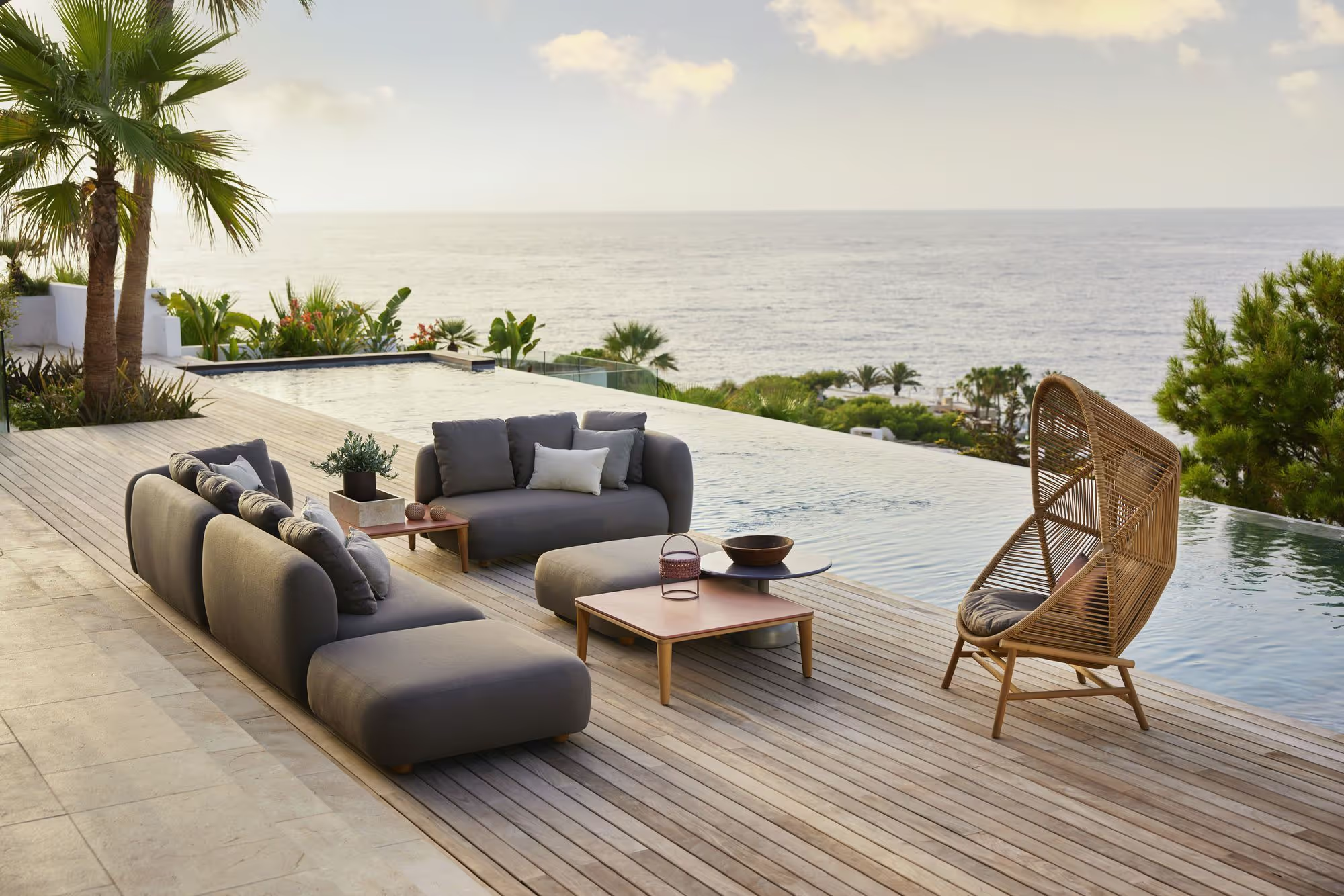
The best pool deck ideas for Canada pair a barefoot-safe, anti-slip surface with a material that shrugs off chlorine, salt water and freeze-thaw movement. Stone composite stays splinter-free, never grows algae, holds its colour under UV, and runs from in-ground surrounds to hot-tub platforms and rooftop pools.
Short answer: The best pool deck ideas for Canada pair a barefoot-safe, anti-slip surface with a material that shrugs off chlorine, salt water and freeze-thaw movement. Stone composite stays splinter-free, never grows algae, holds its colour under UV, and runs from in-ground surrounds to hot-tub platforms and rooftop pools.
A pool deck in Canada has a harder job than almost any other surface on your property. It is wet for months, baked by UV all summer, walked on barefoot, splashed with chlorine or salt water, and then frozen solid for the off-season as the ground heaves and settles around the pool shell. We supply boards across the country, and the surfaces that come back to bite owners are the predictable ones: wood splinters and greys, standard wood-plastic composite (WPC) can swell, fade and grow mildew where water pools, and concrete cracks along freeze-thaw lines and gets blinding-hot underfoot.
This guide gives you 15 pool deck design ideas built specifically for Canadian conditions, then walks through the material science, coping and colour matching, freeze-thaw detailing, winter closing, drainage and real CAD cost ranges. We have organized the designs around Tarimatec stone composite decking — a mineral-rich Ecofiber composite that we distribute exclusively in Canada — because its non-porous, anti-slip, UV-stable properties make it one of the strongest poolside materials we carry. Everything below applies whether you build in cedar, WPC or stone composite, and we will be honest about where each one shines.
Before you fall for a colour, it helps to understand why material choice matters more around a pool than anywhere else on your deck. Tarimatec is European-engineered in Spain (by Plásticos Viters, 70-plus years in the business) and selected for Canadian weather; it is a distinct category from standard WPC, built from rice husk — an agricultural by-product — at 50 parts for every 100 parts of PVC, roughly a quarter of the blend by weight per the EPD, plus ground limestone. That composition changes how it behaves at the water's edge. We have watched the difference play out on a saltwater pool deck north of Toronto: the homeowner had torn out a softwood surround that the saline system had chewed through in a handful of seasons, and the non-porous board went down precisely because the old one had failed at the splash line.
Honest comparison: poured concrete is the cheapest large-format pool surround and porcelain pavers look superb, but both are rigid and prone to freeze-thaw cracking or spalling in our climate, and concrete radiates heat. Western red cedar is beautiful and naturally rot-resistant but needs annual sealing and will splinter as it ages. Stone composite's edge is that it asks for almost no maintenance while staying barefoot-safe and dimensionally stable through the freeze-thaw cycle — which, in our experience, is exactly the trade most pool owners want.
Whether you are framing a brand-new in-ground pool or finally finishing the patchy gravel around an above-ground one, the ideas below are grouped by pool type and layout so you can jump to your situation. Each notes a suggested collection and finish from the 31 colours across the Chromatic (bold/modern), Wood (natural wood-tones) and Ethnic (textured/stone-look) collections, and the three finishes — Nature, Tecno, and Surco (anti-slip).
1. Full-perimeter wraparound in warm grey. The classic: a continuous band of decking framing all four sides of a rectangular in-ground pool, with a picture-frame border board to hide the cut ends. A warm-grey Chromatic tone reads contemporary, hides splash marks and dust between cleanings, and pairs with almost any coping. Run the Surco finish in the immediate splash zone.
2. Wood-look deck for a resort feel. If you want the cottage-resort look without cedar's upkeep, a teak- or oak-tone board from the Wood collection delivers natural warmth around the water. Lay planks parallel to the long edge of the pool to visually stretch the space.
3. Stone-look Ethnic surround that mimics travertine. Travertine and natural-stone pool decks are gorgeous but punishing in freeze-thaw. An Ethnic textured board gives you that high-end stone aesthetic with the dimensional stability of composite — the look of a Mediterranean surround that can survive a Prairie winter.
4. Tanning-ledge and Baja-shelf adjacency. Many new Canadian pools include a shallow tanning ledge. Bring the deck right to the coping at that edge with a flush detail and Surco grooves so loungers can step from sun-shelf to deck on a continuous non-slip plane. Keep a slight drainage fall away from the ledge.
5. Diagonal board pattern for a small urban yard. On a compact lot, run boards at 45 degrees to the pool. The diagonal draws the eye across the space and makes a modest surround feel larger, while a single contrasting border board keeps the geometry crisp.
6. Partial deck along the long side. The most cost-effective above-ground idea: a single-level platform that hugs one long side of the pool rather than wrapping the whole circumference. It gives you entry, a ladder landing and a lounging strip for a fraction of a full wraparound's material.
7. Elevated full surround with privacy screening. For a taller above-ground pool, an elevated deck that meets the top rail turns it into something that looks built-in. Add a slatted privacy screen on the exposed side — useful on Canadian suburban lots where pools sit close to a fence line.
8. Multi-level deck stepping down to the lawn. Use two or three levels to transition from the pool rim down to grade. A change in board direction between levels (parallel up top, diagonal on the landing) defines each zone without railings everywhere, keeping sightlines open to the yard.
9. Flush-set hot tub with a hidden-fastener deck. Drop the spa so its rim sits flush with a continuous deck surface and you get a seamless, splinter-free platform you can walk across barefoot in any season. Hidden fasteners keep the surface clean of screw heads right where wet feet land.
10. Spa with built-in bench seating and a privacy wall. Wrap the hot tub on two sides with bench seating clad in matching decking and add a low privacy wall — a year-round-usable nook that looks intentional, not bolted on. Composite benches never splinter against bare skin.
11. Cold-plunge and sauna deck. The Nordic cold-plunge-plus-sauna setup is having a moment in Canada. A small Surco-finished deck links the sauna door, the plunge tub and a rest bench, giving sure footing on a surface that is constantly wet and used barefoot in winter.
12. Rooftop pool deck on a pedestal system. Tarimatec is pedestal/rooftop compatible in plank and tile formats, which makes it ideal over a waterproofing membrane. Adjustable pedestals create a perfectly level deck above a sloped roof while leaving a drainage gap underneath, so splash-out and rainwater drain to the membrane below instead of ponding on the surface. Stone composite's low thermal movement is a genuine advantage where a rooftop swings from below freezing to baking sun. We dig into this further in our best composite decking in Canada guide.
13. Plunge-pool courtyard in click-tile format. For a small plunge pool in a courtyard or on a terrace, the tile format lets you create a tight, modular surround that drains freely and can be lifted for access. Pair a Chromatic charcoal tile with light-coloured walls for a sharp, modern micro-pool.
14. Lakefront pool-and-dock in one colour story. At a cottage, match the pool deck, the path to the water and the dock surface in a single Wood-collection tone so the whole waterside reads as one designed landscape. The same board that resists chlorine handles lake spray and UV without greying.
15. Multi-level deck with an outdoor kitchen zone. Define a poolside outdoor room: a Tecno smooth-finish lounging-and-dining level set slightly above a Surco-finished wet zone at the water's edge. The finish change quietly tells bare feet where the splash zone begins, and the smooth area stays comfortable for furniture and dining.
Once you have a layout in mind, the detail that separates a designed pool deck from a builder-grade one is how the decking meets the coping — the capped edge that caps the pool shell. With 31 colours to choose from, you can either match the deck tightly to a poured-concrete or natural-stone coping for a monolithic look, or deliberately contrast a dark Chromatic deck against pale coping for a crisp, modern frame. We saw the second approach land beautifully on a Muskoka cottage pool last summer, where a charcoal deck framed pale limestone coping and tied straight into the granite the cottage was already sitting on.
A few Canada-specific colour pointers we give owners:
For finish selection at the water's edge, this is the simplest way we tell people to think about the three options:
| Finish | Surface character | Best poolside use |
|---|---|---|
| Surco | Anti-slip linear groove | Splash zones, steps, tanning-ledge edges, rooftop and any constantly wet path — the default for wet areas |
| Nature | Subtle natural grain | Lounging and dining areas a step back from the water; naturalistic, cottage and lakefront settings |
| Tecno | Smooth contemporary | Dry outdoor-room and furniture zones away from splash; modern minimalist designs |
A common and effective move we recommend: Surco in the wet band immediately around the coping, transitioning to Nature or Tecno in the broader deck. The texture change reads as a design choice while doing real safety work.
If your pool is in-ground, this is where your deck lives or dies, and where most generic design guides go silent. Around an in-ground pool, the ground freezes, heaves and settles each winter, and the deck has to tolerate that movement without buckling or cracking against a rigid pool shell. We get the calls every spring — a surround that locked itself to the coping over a hard winter and tore at the seam when the frost let go.
Stand on a south-facing pool deck near the water on a July afternoon and the two questions that decide your summer are obvious underfoot: where does the water go, and how hot does the surface get. Get the drainage right and you solve half of both.
Drainage. A pool deck should shed water away from the pool and the house. Aim for a gentle fall (a slope of roughly 1–2% is typical) so splash-out and rain run off rather than pond. The gaps between composite boards already let water drain through to the substructure below — a real advantage over a sealed concrete slab that channels every drop across the surface. On a rooftop pool, a pedestal system turns the entire deck into a drainage plane above the membrane.
Winter closing. When you close the pool, the surrounding deck stops being a summer-only concern and becomes a surface under snow and ice for months. We watch a closed pool deck go through the worst of it every year, and two things make the off-season easier with stone composite:
Cleaning is deliberately simple: warm water and a mild soap, with a soft brush for the Surco grooves, clears sunscreen, pollen and the usual poolside grime. Rinse spills promptly and you will keep the surface looking new for years.
If you are pricing a pool deck right now, treat these as planning ranges, not quotes — decks vary enormously with size, height, railings and site access. As a premium, European-engineered stone composite, Tarimatec sits at the upper end of the composite material spectrum, with WPC and pressure-treated wood below it and PVC and porcelain pavers around or above it. Here is roughly what we see quoted across Canada for the board itself:
| Material (poolside) | Indicative material cost (CAD/sq ft) | Maintenance burden | Freeze-thaw resilience |
|---|---|---|---|
| Pressure-treated wood | $4–$9 | High — annual sand and seal; splinters | Moderate; checks and cracks over time |
| Western red cedar | $9–$16 | High — annual seal; greys if neglected | Good, but moves and splinters with age |
| Standard WPC composite | $9–$16 | Low — wash only | Good; can swell/fade where water pools |
| Stone composite (Tarimatec) | $15–$22 | Very low — wash only, no seal/stain | Excellent; low expansion, non-porous |
| Porcelain pavers | $18–$30+ | Low | Premium look, but can spall/crack in freeze-thaw |
Those figures are board/material only. Fully installed pool decks generally land far higher once you add the substructure, frost footings, railings, steps and labour — for elevated and rooftop pool decks especially, the structure and (on rooftops) membrane work can exceed the decking cost. The right way to read the premium: a stone composite deck costs more up front than wood, then saves you the annual seal-and-repair cycle and the mid-life replacement, so its 25-year cost of ownership is highly competitive. For an instant estimate on your own dimensions, use the Zinodeck CAD cost calculator, and see the broader pricing picture in our best Trex alternatives in Canada comparison.
When you are ready to move, the lowest-risk first step is to get the actual boards in your hands and against your coping and siding before you design around them. You can order Tarimatec samples online; full boards are quote-direct so we match the order to your layout, finish split (Surco wet zone versus Nature/Tecno lounging area) and format (plank or tile). Builders, pool installers and landscape contractors can access trade pricing and project support through the Zinodeck dealer program, and architects can pull the EPD and ISO documentation for spec from our sustainability and EPD page.
Over the full life of the deck, low-maintenance composite is usually the most cost-effective choice for a pool. Pressure-treated wood is cheapest to install, but a poolside wood deck needs annual sealing and tends to need repairs or replacement within 10–15 years. A stone composite deck costs more up front yet eliminates the seal-and-repair cycle and carries a 25-year warranty, so its total cost of ownership is highly competitive — and it stays barefoot-safe the whole time.
The cheapest route is a partial deck — a single platform along one side of the pool for entry and lounging rather than a full wraparound — built on a sound, simple substructure. Pressure-treated wood is the lowest material cost. For an above-ground pool, decking only the long side and adding a ladder landing gives you most of the function for a fraction of a full-perimeter deck's material. Around an in-ground pool, reusing an existing structurally sound substructure also cuts cost.
The best poolside material is non-porous, barefoot-safe, slip-resistant when wet, and stable through freeze-thaw. Stone composite checks all four: it resists chlorine and salt water, will not grow algae or mould, never splinters, offers an anti-slip Surco finish, and holds its colour and dimensions through Canadian winters. Concrete and porcelain are durable but rigid and freeze-thaw-prone; cedar is beautiful but high-maintenance and splinters as it ages.
Like any decking, a dark board in full sun will warm up, but stone composite's mineral content helps it resist the heat soak that makes some dark composites and concrete uncomfortable. The practical fix is colour: choose a lighter Wood or Chromatic tone for the main barefoot lounging zone, which reflects more heat and stays noticeably cooler than a charcoal board on a hot July afternoon.
Yes. Salt-water (saline) pools are harder on porous materials and metal than chlorine pools, which is exactly where a non-porous stone composite excels — the mineral-PVC matrix does not absorb saline splash-out or break down from it, and pairing it with appropriate corrosion-resistant fasteners protects the substructure. It is one of the better material choices for the growing number of Canadian salt-water backyards.
Specify an anti-slip surface in the wet zone and keep it clean. Tarimatec's Surco linear-groove finish is designed for wet traction and is the recommended choice for splash zones, steps and rooftop or poolside paths. Because the board is non-porous, it does not develop the algae film that makes wood and porous surfaces dangerously slick near water; a periodic wash with mild soap and a soft brush through the grooves keeps traction reliable.
Or go straight to the range: Tarimatec composite decking in Canada · technical data for architects and specifiers · order decking samples.
{"@context":"https://schema.org","@type":"FAQPage","mainEntity":[{"@type":"Question","name":"What is the most cost-effective pool deck material?","acceptedAnswer":{"@type":"Answer","text":"Over the full life of the deck, low-maintenance composite is usually the most cost-effective choice for a pool. Pressure-treated wood is cheapest to install, but a poolside wood deck needs annual sealing and tends to need repairs or replacement within 10-15 years. A stone composite deck costs more up front yet eliminates the seal-and-repair cycle and carries a 25-year warranty, so its total cost of ownership is highly competitive, and it stays barefoot-safe the whole time."}},{"@type":"Question","name":"What is the cheapest way to deck around a pool?","acceptedAnswer":{"@type":"Answer","text":"The cheapest route is a partial deck, a single platform along one side of the pool for entry and lounging rather than a full wraparound, built on a sound, simple substructure. Pressure-treated wood is the lowest material cost. For an above-ground pool, decking only the long side and adding a ladder landing gives you most of the function for a fraction of a full-perimeter deck's material. Around an in-ground pool, reusing an existing structurally sound substructure also cuts cost."}},{"@type":"Question","name":"What is the best material to put around a pool?","acceptedAnswer":{"@type":"Answer","text":"The best poolside material is non-porous, barefoot-safe, slip-resistant when wet, and stable through freeze-thaw. Stone composite checks all four: it resists chlorine and salt water, will not grow algae or mould, never splinters, offers an anti-slip Surco finish, and holds its colour and dimensions through Canadian winters. Concrete and porcelain are durable but rigid and freeze-thaw-prone; cedar is beautiful but high-maintenance and splinters as it ages."}},{"@type":"Question","name":"Does a stone composite pool deck get too hot to walk on?","acceptedAnswer":{"@type":"Answer","text":"Like any decking, a dark board in full sun will warm up, but stone composite's mineral content helps it resist the heat soak that makes some dark composites and concrete uncomfortable. The practical fix is colour: choose a lighter Wood or Chromatic tone for the main barefoot lounging zone, which reflects more heat and stays noticeably cooler than a charcoal board on a hot July afternoon."}},{"@type":"Question","name":"Can composite decking be used around a salt-water pool?","acceptedAnswer":{"@type":"Answer","text":"Yes. Salt-water (saline) pools are harder on porous materials and metal than chlorine pools, which is exactly where a non-porous stone composite excels. The mineral-PVC matrix does not absorb saline splash-out or break down from it, and pairing it with appropriate corrosion-resistant fasteners protects the substructure. It is one of the better material choices for the growing number of Canadian salt-water backyards."}},{"@type":"Question","name":"How do I keep a pool deck from getting slippery?","acceptedAnswer":{"@type":"Answer","text":"Specify an anti-slip surface in the wet zone and keep it clean. Tarimatec's Surco linear-groove finish is designed for wet traction and is the recommended choice for splash zones, steps and rooftop or poolside paths. Because the board is non-porous, it does not develop the algae film that makes wood and porous surfaces dangerously slick near water; a periodic wash with mild soap and a soft brush through the grooves keeps traction reliable."}}]}