

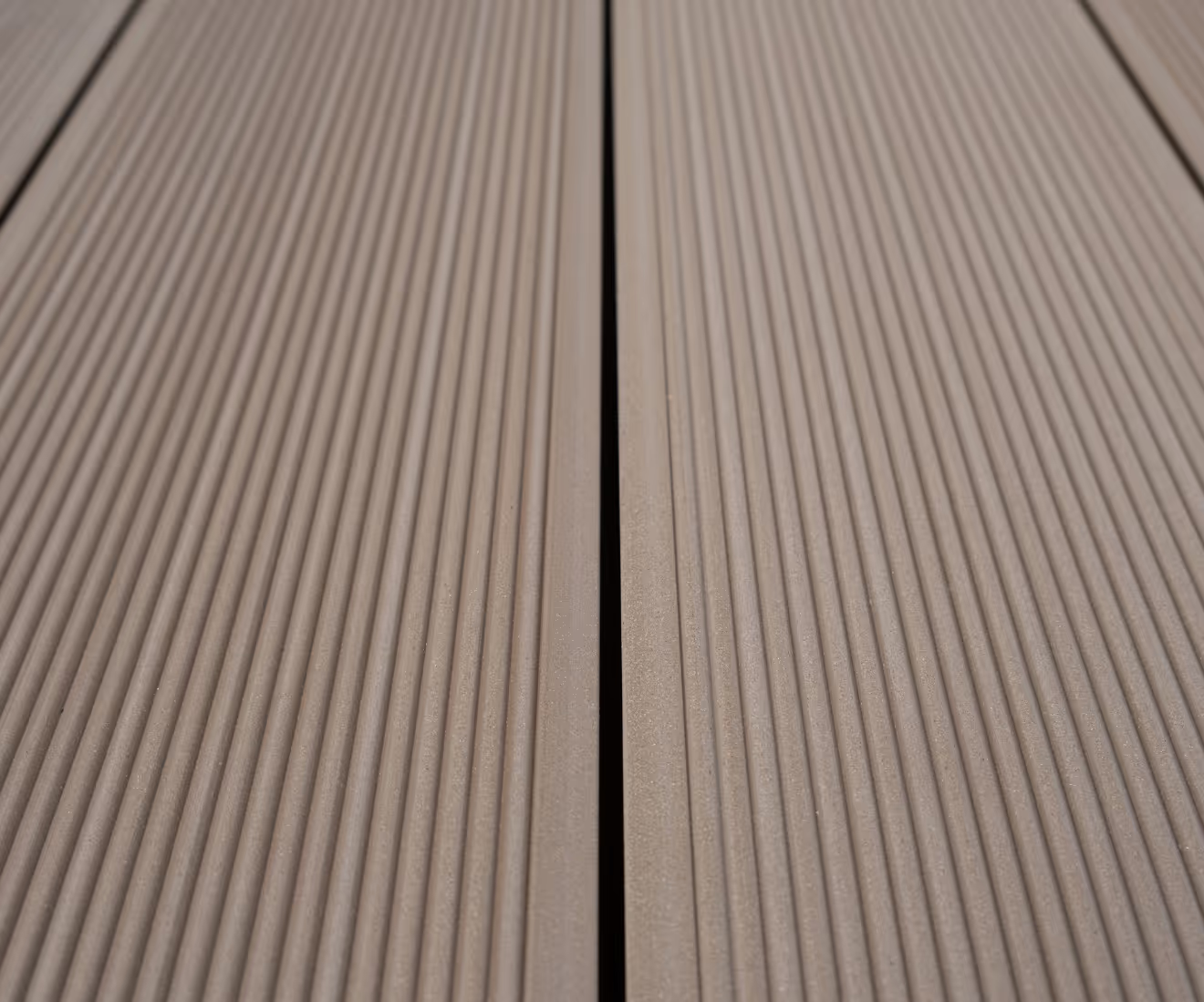
Tarimatec is classified Class 3 and R11 in the wet condition under UNE-ENV 12633, the highest class in that system and the one required for pool surrounds. That covers rain and splash. It does not cover ice, and no slip rating anywhere does, so treat winter as a separate maintenance problem.
Short answer: Tarimatec is classified Class 3 and R11 in the wet condition under UNE-ENV 12633, the highest class in that system and the one required for pool surrounds. That covers rain and splash. It does not cover ice, and no slip rating anywhere does, so treat winter as a separate problem.
Most people asking this question have one of two pictures in their head. Either a pool surround where children will run barefoot and wet all summer, or a shaded deck on the north side of a house that never quite dries out between rainfalls. Those are different problems with different answers, and lumping them together is how people end up disappointed by a board that tested perfectly well.
We supply the Tarimatec decking range across Canada, and this is the question we get most from anyone building near water. Here is what the classification actually means, what it does not cover, and what changes the answer on a real deck.
Slip resistance is not one number, it is a family of tests, and a board can be described by more than one of them.
Class 3 comes from UNE-ENV 12633, the Spanish and European wet-pendulum classification. A weighted pendulum with a rubber slider swings across a wetted sample, and how much the slider drags sets the class. Class 3 is the highest level in that system, and it is the class specified for pool surrounds, changing areas and other places where people walk wet and barefoot. Tarimatec is classified Class 3 in the wet condition under UNE-ENV 12633.
R11 is a different test with a different logic. It comes from the German ramp method, where a tester in standard footwear walks up and down an inclined, wetted sample and the angle at which grip fails determines the rating. R11 sits in the middle to upper part of that scale and is routinely specified for commercial wet areas, kitchens and outdoor walkways. Tarimatec is rated R11 wet.
Two tests, both run wet, both landing in the same place: this is a surface intended to be walked on in the rain and beside water. That is the honest scope of the claim, and it is a genuinely useful one, because most decking slip complaints are rain complaints.
Here is the part the classification does not show you. A rating is measured on a specific surface, and Tarimatec is made in three finishes across 31 colours. Texture is what does the work.
The mechanism is simple. When water sits on a smooth surface, your foot can ride on an unbroken film, and that film is what takes your grip away. A deep emboss or a brushed texture breaks that film into channels, so parts of your sole always meet solid material. It is the same reason a tyre has tread.
Two practical consequences. First, if slip is a priority, shortlist from the more textured end when you browse the 31 Tarimatec colours and finishes, and put a sample under a running hose before you decide. Second, run the direction of the texture along the main walking route rather than across it, so the channels drain in the direction people travel. That is an install decision, and it is free if you make it before the boards go down. Our installation guidance covers the layout side.
Picture a patio on the east side of a house near Nanaimo. Cedar canopy overhead, a fence on the far side, three or four rainy days a week from November through March. That deck is damp for months at a time, and it is not the rain that eventually makes it slippery. It is what grows in the rain.
Algae and biofilm form a slick, faintly green layer over the top of whatever texture the board has. Once that film is established, the R11 rating stops describing what your foot is actually standing on, because your foot is standing on algae. This is the single most common cause of a slippery composite deck we see, and it has nothing to do with the board's classification and everything to do with drainage, shade and cleaning.
The fix is dull and effective: keep water moving off the deck, keep leaf litter from sitting in wet piles over the winter, and wash the surface with warm soapy water and a soft brush once or twice a year. Skip the pressure washer at close range, on any composite board from any brand. If growth is your issue specifically, we go deeper in our post on mould on composite decking.
An Ottawa deck in January is not a slip-resistance question. It is an ice question, and the distinction matters because people expect a wet-rated board to help them in winter, and it will not.
When ice forms, a separate material is sitting between your boot and the deck. The texture below is irrelevant, the pendulum result is irrelevant, and every board on the Canadian market behaves the same way, which is to say badly. No manufacturer holds a slip rating that covers ice, and any that implied one would be inventing it.
What we can give you is winter practice rather than a rating. Clear snow before it packs and glazes, using a plastic or poly-edged shovel rather than a metal blade. Keep sodium chloride rock salt off the surface and away from stainless fixings. Use calcium magnesium acetate or plain sand for traction instead. Our guide to composite decking in a Canadian winter sets out the full routine, including why we do not publish a cold-temperature rating.
This is the table we would sketch on the back of a quote. Find the row that matches the condition worrying you.
| Surface state | What to expect | What to do |
|---|---|---|
| Dry | Full grip. Nobody has ever complained about a dry composite deck | Nothing |
| Rain-wet or splashed | The condition the ratings describe. Class 3 and R11 wet under UNE-ENV 12633, which is the class required for pool surrounds | Choose a textured finish, run the texture along the walking route, and keep the deck draining |
| Algae or biofilm | The real-world slip risk. A slick film covers the texture and the rating no longer describes what you are standing on | Wash with warm soapy water and a soft brush, improve drainage, clear leaf litter before winter |
| Frost | Noticeably slippery, similar to frost on any hard surface. Usually gone within an hour of sun | Sand or calcium magnesium acetate on the route people actually use. Never rock salt |
| Ice | Slippery, on every decking material sold in Canada. No slip classification covers this | Clear snow before it packs with a plastic shovel, do not chip at ice, use sand or calcium magnesium acetate for traction |
Tarimatec's slip data is European. UNE-ENV 12633 is a Spanish standard, the R11 rating comes from the German ramp method, and both were run in European labs. They are real, published results, and for a residential deck or a pool surround they tell you what you need to know.
What Tarimatec does not hold today is a CCMC evaluation. Several North American competitors do, and Fiberon holds CCMC 13500-R. If you are specifying for a project where a Canadian evaluation report has to be in the submittal package, that is a genuine advantage on their side, and you should know it now rather than at review. For pool projects specifically, our guide to specifying composite decking for pool decks walks through what to put in the spec.
Class 3 is the highest slip classification in the Spanish and European system set out in UNE-ENV 12633, and it is the class required for pool surrounds and other wet, barefoot areas. It is measured with a wet pendulum on a wetted sample, so it describes the surface in rain and splash conditions, not in ice.
R11 comes from the German ramp classification, where a tester walks an inclined, wetted sample and the angle at which they lose grip sets the rating. R11 sits in the middle to upper part of that scale and is a common specification for commercial wet areas and outdoor walkways.
No. No slip rating anywhere in the world covers ice. Ice is a layer of a different material sitting on top of the deck, and once it forms, the texture underneath stops mattering. Treat ice as a maintenance problem, not a material property.
Yes, and it is the most common cause of a slippery deck. Algae and biofilm build up in shaded, damp, poorly drained areas and form a slick layer over the surface texture. A wash with warm soapy water and a soft brush restores the surface. Do not use a pressure washer at close range on any composite board.
Deeply embossed and brushed finishes generally give more grip than smooth ones, because the texture keeps a film of water from forming an unbroken layer under your foot. Direction matters too: run the grain of the texture along the main walking route rather than across it.
Not today. Tarimatec's slip data is Spanish and European, tested under UNE-ENV 12633, and Tarimatec does not currently hold a CCMC evaluation. Several North American competitors do. If your project needs a Canadian evaluation report on file, ask for it early and check it against the specific board you are quoting.
If a pool surround or a shaded, damp deck is what you are building, the useful next step is to get a textured sample wet in your own hands and stand on it. Order decking samples, which are paid and ship from Vaughan, Ontario in 5 to 10 business days, or request a project quote in CAD when you have your finish and square footage settled. Boards are import-to-order on an 8 to 12 week lead time, so build that into your season.
{"@context": "https://schema.org", "@type": "FAQPage", "mainEntity": [{"@type": "Question", "name": "What does Class 3 mean for decking?", "acceptedAnswer": {"@type": "Answer", "text": "Class 3 is the highest slip classification in the Spanish and European system set out in UNE-ENV 12633, and it is the class required for pool surrounds and other wet, barefoot areas. It is measured with a wet pendulum on a wetted sample, so it describes the surface in rain and splash conditions, not in ice."}}, {"@type": "Question", "name": "What does an R11 rating mean?", "acceptedAnswer": {"@type": "Answer", "text": "R11 comes from the German ramp classification, where a tester walks an inclined, wetted sample and the angle at which they lose grip sets the rating. R11 sits in the middle to upper part of that scale and is a common specification for commercial wet areas and outdoor walkways."}}, {"@type": "Question", "name": "Does a wet slip rating tell me anything about ice?", "acceptedAnswer": {"@type": "Answer", "text": "No. No slip rating anywhere in the world covers ice. Ice is a layer of a different material sitting on top of the deck, and once it forms, the texture underneath stops mattering. Treat ice as a maintenance problem, not a material property."}}, {"@type": "Question", "name": "Can a composite deck become slippery over time?", "acceptedAnswer": {"@type": "Answer", "text": "Yes, and it is the most common cause of a slippery deck. Algae and biofilm build up in shaded, damp, poorly drained areas and form a slick layer over the surface texture. A wash with warm soapy water and a soft brush restores the surface. Do not use a pressure washer at close range on any composite board."}}, {"@type": "Question", "name": "Does the finish I choose change the grip?", "acceptedAnswer": {"@type": "Answer", "text": "Deeply embossed and brushed finishes generally give more grip than smooth ones, because the texture keeps a film of water from forming an unbroken layer under your foot. Direction matters too: run the grain of the texture along the main walking route rather than across it."}}, {"@type": "Question", "name": "Does Tarimatec hold a Canadian slip evaluation?", "acceptedAnswer": {"@type": "Answer", "text": "Not today. Tarimatec's slip data is Spanish and European, tested under UNE-ENV 12633, and Tarimatec does not currently hold a CCMC evaluation. Several North American competitors do. If your project needs a Canadian evaluation report on file, ask for it early and check it against the specific board you are quoting."}}]}