

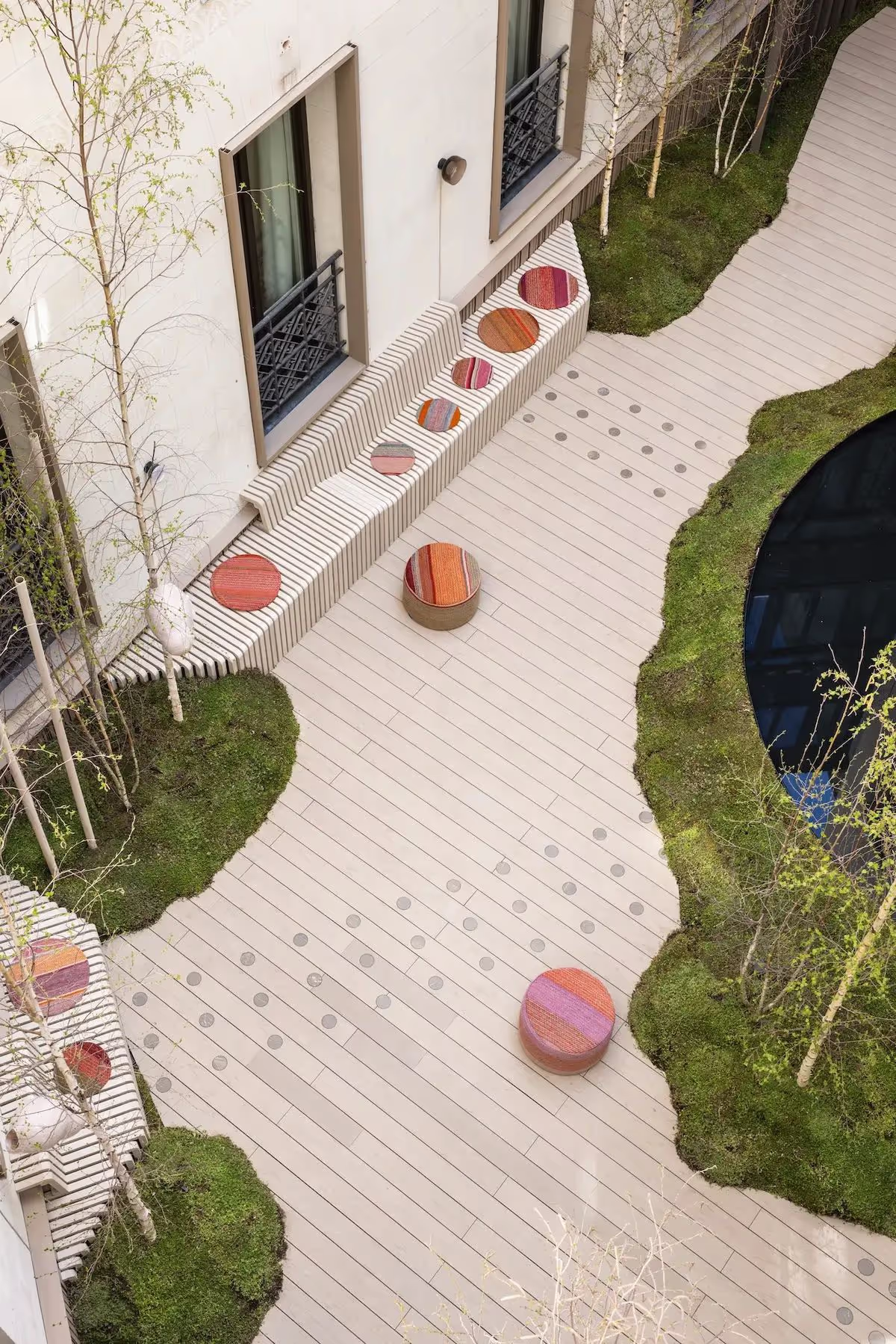
There is no published cold-temperature rating for Tarimatec, and we will not claim one. What we can give you is the winter routine that protects a composite deck in Canada: a plastic shovel, never a metal blade, no rock salt near the stainless fixings, sand or calcium magnesium acetate for traction.
Short answer: There is no published cold-temperature rating for Tarimatec, and we will not claim one. What we can give you is the winter routine that actually protects a composite deck in Canada: a plastic shovel and never a metal blade, no rock salt anywhere near the stainless fixings, sand or calcium magnesium acetate for traction, and gaps sized for the temperature on install day.
You are asking a fair question and you deserve a straight answer, so we will lead with the uncomfortable part. Every decking brand selling in this country wants to tell you their board is built for Canadian winters. Ask for the test that proves it and the conversation usually gets vague.
Here is ours. Tarimatec does not hold a published cold-temperature rating. Not a low one, not a high one, none. The board is made in Valencia by Plasticos Viters S.A. and tested to European standards, and those standards do not produce a Canadian cold rating. We could dress that up. We would rather tell you what we actually know and then give you the maintenance routine that matters far more than any number.
Anyone can write a temperature on a web page. Nobody can check it. That is precisely why we will not write one, because a claim you cannot verify is worth nothing to you and everything to a competitor's lawyer.
What Tarimatec does publish is a set of European test results, and several of them do bear on winter. Water absorption is measured under UNE-EN 317 at 0.59 per cent at 24 hours in the hollow profile, 0.38 per cent in the solid profile, and 1.66 per cent at 28 days. That matters in a freeze-thaw climate for an obvious reason: water expands when it freezes, and the less water a board takes on, the less there is inside it to do that. Two independent fungus tests, for basidiomycete rot and soft rot, return a result of not attackable in manufacturer lab data, which speaks to the damp spring rather than the deep freeze.
Coverage is a 25-year manufacturer warranty from Tarimatec, administered in Canada by Zinodeck, which excludes damage from weight overload. That exclusion is worth reading twice before you pile a winter's worth of shovelled snow into one corner of the deck.
So: real data, honestly scoped, and a gap where a cold rating would be. Now the part that will actually decide how your deck looks in April.
A deep freeze in Ottawa is the simplest winter to plan for, because it is relentless rather than variable. The deck goes cold in December and stays cold. What wears it down is not the temperature, it is the shovel.
Use a plastic blade or a poly wear edge. A steel-edged shovel on a composite deck is the single most common source of the scratches people blame on the board. Clear along the length of the boards rather than across them, so the blade rides over the surface instead of catching every board edge and gap. Get the snow off before foot traffic packs it into a glaze, because packed snow becomes ice and ice is the thing you cannot fix with technique.
And do not chip. When someone attacks bonded ice with a spade or an ice chipper, the ice usually wins and the surface underneath loses. If ice has already formed, put sand down for grip and wait for it to release on its own.
Sodium chloride rock salt is the default winter reflex in most Canadian garages, and it is the wrong tool here for a specific mechanical reason rather than a vague one.
Tarimatec decks are fixed with hidden clips in AISI 304L or 316L stainless at 25 clips per square metre, onto aluminium joists in EN AW 6005 T6. Stainless is corrosion-resistant, not corrosion-proof, and chlorides are exactly the chemistry it likes least, particularly in the damp, poorly ventilated pockets where salty meltwater collects and sits. There is no upside that justifies introducing it. Rock salt also leaves a white residue across the surface that you then have to wash off in spring.
Use plain sand where you need traction, and calcium magnesium acetate where you genuinely need a de-icer. Sand does nothing chemically, gives immediate grip, and sweeps up in April. Calcium magnesium acetate is considerably gentler on fixings and adjacent surfaces than sodium chloride. Neither one makes an icy deck safe, which is why clearing the snow early beats treating the ice later. Our post on whether composite decking is slippery when wet explains why the wet slip classification does not carry over to ice.
Calgary gets a winter that will not sit still. A chinook rolls over the Rockies and swings the temperature twenty degrees in an afternoon, then it drops back overnight. Every board on that deck grows and shrinks with the swing, several times a season.
The material can only do half of that job. The other half is the gap you left, and the gap you should leave depends on how warm the boards were on the day they went down. A board is at its longest when it is hot and its shortest when it is cold, so a cold install has the most growing left to do and needs the most room.
| Board temperature at install | End-to-end gap | Board-to-fixed-object gap |
|---|---|---|
| Below 5 degrees Celsius, a cold install | Leave the largest gap in the manufacturer's range, because the boards will grow considerably before August | Largest in the range |
| 5 to 15 degrees Celsius | Mid-range | Mid-range |
| Above 25 degrees Celsius, a hot install | Smallest gap in the range, because the boards are already close to their longest | Smallest in the range |
This is installation guidance derived from Tarimatec's installation manual, not a substitute for it. Confirm the actual figures against the current manual for your specific board length and profile before anyone cuts, and read our guide to composite decking expansion gaps for the detail on side gaps, fixed objects and clip spacing. Our installation guidance covers the substructure alongside it.
The cottage deck is a different animal, because nobody is there to shovel it. It takes the whole winter in one go, then thaws unattended some week in April while you are still in the city.
Two things are worth planning for. First, snow load. The warranty excludes damage from weight overload, so if you or a caretaker do clear it, spread the snow off the edges rather than building a two-metre pile in one bay. Second, drainage. Meltwater has to get off the surface, through the gaps and away from under the deck, and a season of leaf litter packed into the gaps in October is what stops it. Clear the gaps and the space under the deck before you close up for the year, and the spring melt takes care of itself.
When you do arrive in May, the opening routine is short. Sweep the grit and any tracked-in salt residue, clear the gaps and the underside so water drains, and wash the boards with warm soapy water and a soft brush. Keep the pressure washer at a distance or leave it in the shed entirely. That is the whole annual programme, and it is one of the honest reasons people move off wood.
No. There is no published cold-temperature rating for Tarimatec, and we will not invent one. The board is European-engineered and tested to European standards, and none of those tests produce a Canadian cold rating. What we can give you is practical winter guidance and the tests that do exist, clearly labelled as guidance rather than a rating.
Use a shovel with a plastic blade or a poly wear edge, never a metal blade. Clear snow along the length of the boards rather than across them, so the blade rides the boards instead of catching every edge. Clear before the snow packs, and do not chip at ice that has already bonded to the surface.
Because sodium chloride is aggressive toward the stainless fixings holding the deck down, and it leaves a white residue on the surface. Tarimatec is fixed with hidden clips in AISI 304L or 316L stainless at 25 clips per square metre, and there is no reason to introduce chlorides to them. Use calcium magnesium acetate or plain sand for traction instead.
Plain sand is the safest traction aid and sweeps up in spring. Calcium magnesium acetate is the de-icer we suggest where you need one, because it is far gentler on fixings and surrounding surfaces than rock salt. Neither will make an icy deck safe, so clear the snow before it turns to ice rather than relying on either.
The board is at its shortest on a cold day, so a cold-day installation needs the largest end gap in the manufacturer's range and a hot-day installation needs the smallest. Boards butted tight against a wall or a post during a February build have nowhere to go in July, and that is the classic winter-install failure. Confirm the figures against Tarimatec's current installation manual for your board length and profile.
Sweep off grit and salt residue tracked in over the winter, clear the gaps between boards and the space under the deck so meltwater drains, and wash the surface with warm soapy water and a soft brush. Check that ventilation under the deck is not blocked by leaf litter. Skip the pressure washer at close range.
If you are planning a build for next season, the winter question is really a planning question: get the boards ordered and the gapping decided before the weather makes the decision for you. Browse the Tarimatec decking range, order decking samples, which are paid and ship from Vaughan, Ontario in 5 to 10 business days, or request a project quote in CAD. Boards are import-to-order on an 8 to 12 week lead time, so a spring deck is a winter decision.
{"@context": "https://schema.org", "@type": "FAQPage", "mainEntity": [{"@type": "Question", "name": "Is Tarimatec rated for Canadian cold?", "acceptedAnswer": {"@type": "Answer", "text": "No. There is no published cold-temperature rating for Tarimatec, and we will not invent one. The board is European-engineered and tested to European standards, and none of those tests produce a Canadian cold rating. What we can give you is practical winter guidance and the tests that do exist, clearly labelled as guidance rather than a rating."}}, {"@type": "Question", "name": "How should I shovel a composite deck?", "acceptedAnswer": {"@type": "Answer", "text": "Use a shovel with a plastic blade or a poly wear edge, never a metal blade. Clear snow along the length of the boards rather than across them, so the blade rides the boards instead of catching every edge. Clear before the snow packs, and do not chip at ice that has already bonded to the surface."}}, {"@type": "Question", "name": "Why can I not use rock salt on a composite deck?", "acceptedAnswer": {"@type": "Answer", "text": "Because sodium chloride is aggressive toward the stainless fixings holding the deck down, and it leaves a white residue on the surface. Tarimatec is fixed with hidden clips in AISI 304L or 316L stainless at 25 clips per square metre, and there is no reason to introduce chlorides to them. Use calcium magnesium acetate or plain sand for traction instead."}}, {"@type": "Question", "name": "What should I use for traction instead?", "acceptedAnswer": {"@type": "Answer", "text": "Plain sand is the safest traction aid and sweeps up in spring. Calcium magnesium acetate is the de-icer we suggest where you need one, because it is far gentler on fixings and surrounding surfaces than rock salt. Neither will make an icy deck safe, so clear the snow before it turns to ice rather than relying on either."}}, {"@type": "Question", "name": "Does the temperature on install day really matter?", "acceptedAnswer": {"@type": "Answer", "text": "The board is at its shortest on a cold day, so a cold-day installation needs the largest end gap in the manufacturer's range and a hot-day installation needs the smallest. Boards butted tight against a wall or a post during a February build have nowhere to go in July, and that is the classic winter-install failure. Confirm the figures against Tarimatec's current installation manual for your board length and profile."}}, {"@type": "Question", "name": "What should I do in spring?", "acceptedAnswer": {"@type": "Answer", "text": "Sweep off grit and salt residue tracked in over the winter, clear the gaps between boards and the space under the deck so meltwater drains, and wash the surface with warm soapy water and a soft brush. Check that ventilation under the deck is not blocked by leaf litter. Skip the pressure washer at close range."}}]}